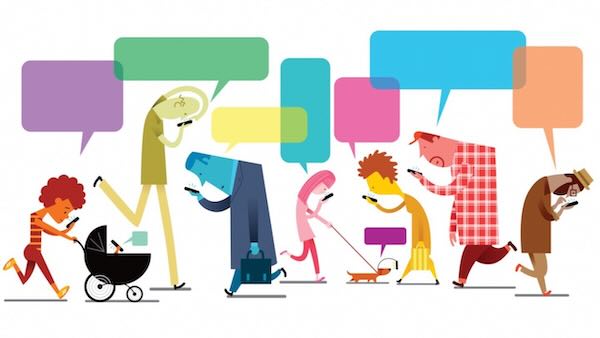
"AI Slop is actually Human Slop. Some are complaining about the proliferation of what they call 'AI Slop' - rubbish content, poorly made, click bait, short and designed for scrolling. BUT all of this content has been created by Humans asking AI to make it, and then actively choosing to publish that content, and then the viewers actively choose to consume it, click like, share it and give it legitimacy. Just because the AI has created it doesn't make the AI responsible for it, in the same way that a camera is not at fault if the person using it takes awful photos. What is called AI Slop is in fact a reflection of the mindlessness of the humans that make it and consume it."
AI Slop Isn’t Artificial — It’s Cultural
We didn’t create a new problem with AI. We removed the last excuse.
The Hook: Blaming the Mirror
Every few months, a new moral panic breaks across the internet: AI slop is ruining culture.
Low-effort. Clickbait. Endless. Empty.
But this framing flatters us. It suggests the rot arrived from outside — from silicon, not ourselves.
The truth is colder: AI didn’t lower the bar. It revealed where the bar already was — and then industrialised access to it. What we’re calling “AI slop” is not artificial intelligence gone rogue. It’s human taste, incentives, and attention, finally operating without friction.
The Tension: Culture Under Zero Friction
None of this is new.
From vaudeville gags to early television sitcoms, from tabloids to reality TV, mass culture has always leaned toward the easy, the repetitive, and the emotionally blunt. What’s changed isn’t appetite — it’s latency.
For most of cultural history, even rubbish required effort:
-
writers
-
editors
-
studios
-
budgets
-
time
AI collapses that pipeline into a prompt.
When effort approaches zero, production explodes. When algorithms reward engagement over meaning, selection collapses into whatever triggers the fastest reaction. And when audiences reward that output with clicks, likes, and shares, legitimacy follows automatically.
Calling this “AI slop” mistakes acceleration for authorship.
The Analysis: Attention Is the Bottleneck, Not Creativity
Thinking is expensive.
Cognitively, it burns energy. Emotionally, it creates uncertainty. Socially, it risks disagreement. Mindless entertainment does the opposite: fast reward, no obligation, no aftertaste.
On a population scale, attention flows toward:
Maximum stimulation per unit of effort
AI didn’t invent this equation. It solved it.
That’s why the camera analogy matters. A camera doesn’t decide to take bad photos. But give everyone a camera and reward the worst instincts at scale, and the gallery fills with noise. AI is not the photographer. It’s the darkroom running at machine speed.
The more unsettling implication is this:
We may be approaching a cultural limit — not of technology, but of sustained attention.
Three Futures (None Comfortable)
1. The Sludge Singularity (Inertia Wins)
Culture becomes ambient stimulus:
-
ultra-short
-
hyper-emotional
-
endlessly recursive
Novelty collapses into remix. Memory gives way to reaction. The human mind doesn’t break — it adapts downward, losing tolerance for depth, ambiguity, and silence.
This future requires no villain. Just momentum.
2. Cognitive Bifurcation (Already Happening)
Culture splits in two.
The Mass Layer
-
Infinite AI-generated entertainment
-
Disposable, personalised, forgettable
The High-Signal Layer
-
Curated, slow, scarce
-
Human-authored or tightly human-directed
-
Expensive in time, money, or social capital
Thinking becomes a luxury good. Depth survives — but behind friction.
3. Attention Becomes Sacred (Hard Mode)
Friction is reintroduced by choice:
-
slower platforms
-
intentional media diets
-
cultural norms that value meaning over immediacy
This requires humans to prioritise long-term cognitive health over short-term pleasure — historically a weak bet. But pockets already exist. They just don’t scale naturally in an economy optimised for impulse.
The Verdict: The Real Problem Is Us — But That’s Not an Excuse
AI will be blamed for what follows. It always is.
But the deeper truth is harsher and more useful:
AI didn’t hollow out culture. It exposed how much of it was already built on distraction — and removed the last constraints pretending otherwise.
This isn’t a story about machines replacing creativity.
It’s about humans discovering, uncomfortably, what we reward when thinking is optional.
The question that remains isn’t whether AI can be better.
It’s whether we still want culture that asks something of us —
when effortless entertainment is infinite, immediate, and always one scroll away.
That’s not a technological dilemma.
It’s a civilisational one.
Further Reading
Foundational Context on the Attention Economy
1. Attention economy (Wikipedia)
A solid, accessible overview of the attention economy concept — how human attention is treated as a scarce resource in an information-rich world, tracing its origins and key theoretical points.
Expert Perspectives on AI & Attention
2. The Attention Economy and the Impact of AI (Digital Humanism)
A thoughtful discussion of how artificial intelligence and algorithmic feedback loops shape the way attention is captured, manipulated, and monetized, including ethical implications for society.