Series: Beginner's Guide to AI #17
Read Time: 14 minutes
Level: Beginner
Prerequisites: Guide #1 - What Is AI?, Guide #16 - AI and Society
Key Takeaways
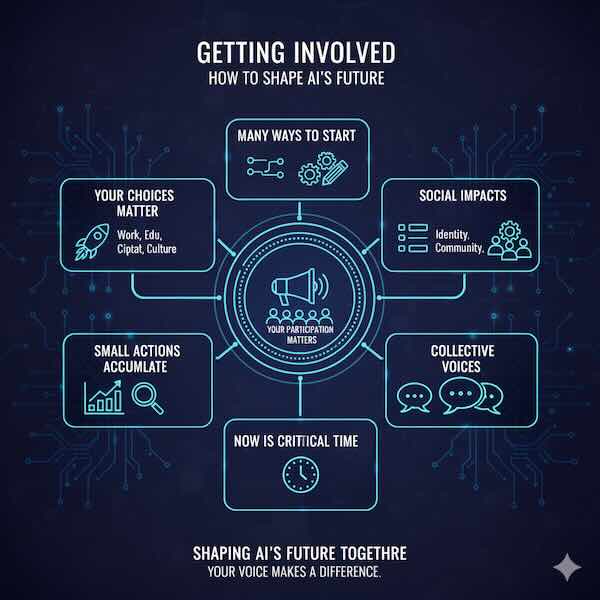
- AI's future isn't predetermined - your participation and choices actually matter
- Many ways to get involved exist regardless of your background, skills, or time available
- Small actions accumulate - you don't need to be an expert or leader to make a difference
- Collective voices shape outcomes more effectively than individual experts alone
- Now is the critical time to participate as AI governance frameworks are being established
You've learned what AI is, how it works, where it's headed, and how it's transforming society. You understand the opportunities and risks. You recognize the ethical questions. You see the stakes.
Now what?
The natural response is to feel like a spectator watching powerful forces beyond your control. Tech companies with billions in funding, governments with vast resources, and AI researchers with specialized expertise seem to hold all the cards. What can one person do?
More than you think. The future of AI isn't being determined solely in corporate boardrooms or research labs. It's being shaped right now through countless decisions—regulatory frameworks, business practices, funding priorities, social norms, and public discourse. You can influence all of these.
This isn't motivational platitude. History shows that technological futures are shaped as much by social movements, consumer choices, political advocacy, and cultural values as by technical development. The printing press, electricity, automobiles, the internet—each was steered by non-experts demanding their voices be heard.
AI is no different. Whether it becomes humanity's greatest tool or greatest threat depends partly on what you do. This guide shows you how to get involved, whatever your background, skills, or available time.
Let's explore how you can help shape AI's future.
Why Your Voice Matters
Before diving into actions, understand why individual participation matters.
The Critical Window
Right now is uniquely important:
Governance frameworks being established:
- Next few years will set long-term patterns
- Early decisions become entrenched
- Getting involved now has outsized impact
- Later is less effective
Public attention is high:
- AI is mainstream news topic
- Policymakers are listening
- Companies are responsive (somewhat)
- Cultural moment creates opportunity
Outcomes still uncertain:
- Multiple possible futures exist
- Choices haven't been made yet
- Power balances haven't solidified
- Your input can matter
Historical parallel:
Early internet regulation (or lack thereof) shaped decades of development. We're at a similar moment with AI.
Democracy Requires Participation
The principle:
AI will affect everyone. Therefore everyone should have input.
Why this matters:
Expert-only governance fails:
- Experts have biases and blind spots
- Technical expertise doesn't include ethical wisdom
- Affected communities must speak for themselves
- Democracy requires broad participation
Your perspective is valuable:
- You experience AI's impacts directly
- You understand your community's needs
- You represent values experts might miss
- Diversity of input improves outcomes
Your participation legitimizes governance:
- Democratic decisions require public input
- Without participation, AI governance lacks legitimacy
- Your involvement makes governance stronger
- Silence means accepting whatever experts decide
Collective Action Works
History proves:
Social movements shape technology.
Examples:
Environmental movement:
- Changed industrial practices
- Established regulations
- Shifted public values
- Forced corporate accountability
Privacy advocacy:
- Created data protection laws (GDPR, CCPA)
- Changed company practices
- Established rights
- Ongoing influence
Open source software:
- Challenged corporate monopolies
- Created alternatives
- Shaped industry norms
- Demonstrated collective power
You're not alone:
Millions share your concerns. Individual voices amplify each other. Collective action creates change.
Low-Effort, High-Impact Actions
Start here if you have limited time or are just beginning.
Consumer Choices
Your dollars and clicks matter:
Support ethical AI companies:
Research before choosing:
- Which companies prioritize safety?
- Who has strong privacy policies?
- Which developers are transparent?
- Who engages with concerns?
Vote with your wallet:
- Subscribe to ethical services
- Avoid companies with harmful practices
- Support open-source alternatives
- Choose privacy-respecting options
Specific actions:
- Use AI services with opt-out from training
- Choose companies with published safety research
- Support platforms with strong moderation
- Avoid services with exploitative practices
Impact:
Companies respond to market pressure. Collective consumer choices shift business practices.
Social Media and Communication
Use your voice online:
Share information:
- Post articles about AI developments
- Explain concepts to your network
- Counter misinformation
- Amplify expert voices
Engage constructively:
- Comment on AI-related posts
- Participate in discussions
- Ask questions
- Share your perspective
Follow and amplify:
- AI safety researchers
- Tech policy experts
- Ethical AI advocates
- Diverse voices in AI
What to avoid:
- Spreading fear without facts
- Engaging in unproductive arguments
- Amplifying misinformation
- Dismissing others' concerns
Impact:
You shape discourse in your network. Ideas spread through social sharing. Public conversation influences policy.
Sign Petitions and Letters
Easy participation in organized campaigns:
Find opportunities:
- AI safety organizations run campaigns
- Public interest groups organize petitions
- Open letters from experts accept signatures
- Government consultations seek input
Where to look:
- Future of Life Institute
- Center for AI Safety
- Electronic Frontier Foundation
- Algorithm Watch
- AI Now Institute
- Local digital rights organizations
Action:
- Sign petitions you agree with
- Submit comments to government consultations
- Add your name to open letters
- Share campaigns with others
Impact:
Numbers matter. Thousands of signatures demonstrate public concern. Policymakers pay attention to organized campaigns.
Contact Your Representatives
Elected officials need to hear from constituents:
What to do:
Find your representatives:
- National legislators
- State/provincial representatives
- Local officials
- Regulators
Contact methods:
- Email (easiest)
- Phone calls (more impactful)
- Letters (formal)
- Town halls (most impactful)
What to say:
- Express concern about specific AI issues
- Request support for specific policies
- Ask about their AI positions
- Demand accountability and transparency
Template approach:
"As your constituent, I'm concerned about [specific AI issue]. I urge you to support [specific policy or action]. AI affects our community through [local impact]. Please prioritize responsible AI governance."
Impact:
Representatives respond to constituent contact. Even a dozen messages on an issue creates awareness. Organized constituent campaigns influence votes.
Provide Feedback to Companies
Companies care about user input:
How:
Direct feedback:
- Use feedback features in AI products
- Report problems and concerns
- Suggest improvements
- Flag harmful outputs
Public feedback:
- App store reviews mentioning AI practices
- Social media mentions of companies
- Product forums and communities
- Blog posts and articles
Organized campaigns:
- Join boycotts of harmful practices
- Participate in company-directed campaigns
- Support shareholder resolutions
- Engage with company consultations
Impact:
Companies track feedback. Bad press affects business. User demands influence product development. Collective pressure changes practices.
Medium-Effort Actions
These require more time or commitment but have greater impact.
Educate Others
Share your knowledge:
Informal education:
Conversations:
- Talk about AI with family and friends
- Explain concepts you've learned
- Discuss implications
- Share concerns and hopes
Online content:
- Write blog posts
- Create social media threads
- Make videos explaining AI
- Contribute to forums and discussions
Presentations:
- Offer to speak at local groups
- Present at work or school
- Teach community classes
- Lead discussion groups
What to cover:
- AI basics (what it is, how it works)
- Current capabilities and limitations
- Societal impacts
- Ethical questions
- How to use AI safely
- Ways to get involved
Approach:
- Meet people where they are
- Avoid jargon
- Use relatable examples
- Listen to concerns
- Provide resources for learning more
Impact:
Informed citizens make better decisions. Education builds movements. Understanding creates engagement. Your teaching multiplies your impact.
Participate in Public Consultations
Governments seek public input:
What are they:
When governments develop AI policies, they often request public comment.
How to participate:
Find consultations:
- Government websites
- AI policy organizations that track them
- News about regulatory developments
- Notifications from advocacy groups
Submit comments:
- Read proposed regulations
- Identify concerns and support
- Write clear, specific feedback
- Submit before deadlines
What makes effective comments:
- Specific rather than general
- Evidence-based when possible
- Personal stories and impacts
- Constructive suggestions
- Clear and concise
Example:
"I support the proposed requirement for AI transparency in hiring. As a job seeker, I've been rejected by AI systems with no explanation. This regulation would help me understand and challenge unfair decisions. I recommend strengthening the provision by requiring companies to provide specific reasons for rejections."
Impact:
Regulators read and consider public comments. Your input shapes final regulations. Demonstrated public concern influences policy.
Join or Support Organizations
Organized groups amplify individual voices:
Types of organizations:
AI Safety and Ethics:
- Center for AI Safety
- Future of Life Institute
- Machine Intelligence Research Institute
- Partnership on AI
- AI Now Institute
Digital Rights:
- Electronic Frontier Foundation
- Access Now
- Privacy International
- Algorithm Watch
- Data & Society
Policy and Advocacy:
- Tech Policy organizations
- Consumer advocacy groups
- Labor organizations
- Environmental groups addressing AI
How to support:
Financial:
- Donate money
- Become a member
- Fund specific campaigns
- Support crowdfunding efforts
Time:
- Volunteer for campaigns
- Help with research
- Contribute skills (writing, design, tech)
- Participate in events
Amplification:
- Share their work
- Attend events
- Join mailing lists
- Spread awareness
Impact:
Organizations have resources and reach individuals lack. Your support amplifies effectiveness. Collective funding enables professional advocacy.
Attend Events and Conferences
In-person engagement builds knowledge and networks:
Types of events:
Public events:
- AI ethics forums
- Tech policy discussions
- University lectures
- Library programs
- Community meetings
Conferences:
- AI safety conferences
- Tech policy conferences
- Academic symposiums
- Industry events (some public)
Workshops and trainings:
- AI literacy programs
- Digital rights workshops
- Policy advocacy training
- Community organizing
Benefits:
Learning:
- Hear expert perspectives
- Stay current on developments
- Understand complex issues
- Access primary sources
Networking:
- Meet like-minded people
- Find collaborators
- Build community
- Create relationships
Participation:
- Ask questions
- Share perspectives
- Contribute to discussions
- Influence conversations
Finding events:
- Organization websites and newsletters
- University event calendars
- Meetup and Eventbrite
- Social media event pages
- Local library and community centers
Impact:
In-person engagement builds movements. Relationships enable collaboration. Face-to-face discussion changes minds. Events create momentum.
Create Content and Research
Contribute to public knowledge:
Types of contributions:
Research:
- Investigate specific AI issues
- Document impacts in your community
- Analyze policies and practices
- Survey public opinion
Writing:
- Blog posts and articles
- Op-eds for newspapers
- White papers and reports
- Guides and explainers
Multimedia:
- Videos and podcasts
- Infographics and visualizations
- Interactive tools
- Social media campaigns
What to focus on:
Underrepresented perspectives:
- Impacts on specific communities
- Non-technical viewpoints
- Local and regional concerns
- Overlooked issues
Accessible explanations:
- Complex topics made simple
- Jargon-free language
- Relatable examples
- Practical guidance
Original insights:
- Personal experiences
- Community knowledge
- Unique angles
- Creative approaches
How to share:
- Personal blog or website
- Medium or Substack
- YouTube or TikTok
- Submit to publications
- Share with organizations
Impact:
Content shapes understanding. Research informs policy. Creative work reaches new audiences. Your contribution fills gaps.
High-Effort, High-Impact Actions
These require significant commitment but can create substantial change.
Career Pivots and Professional Work
Dedicate your career to shaping AI:
Career paths:
Technical AI safety:
- Become AI safety researcher
- Work on alignment problems
- Develop safety tools
- Test and audit AI systems
Policy and governance:
- AI policy analyst
- Regulatory specialist
- Legislative staffer focusing on AI
- Government AI advisor
Ethics and oversight:
- AI ethicist
- Corporate responsibility officer
- Independent auditor
- Nonprofit researcher
Advocacy and organizing:
- Campaign organizer
- Policy advocate
- Movement builder
- Communications specialist
How to transition:
From tech:
- Shift focus to safety and ethics
- Join AI safety organizations
- Contribute to open-source safety projects
- Apply technical skills to governance
From other fields:
- Take AI policy courses or programs
- Volunteer with organizations
- Build relevant expertise
- Network in the field
- Apply transferable skills
Education:
- AI safety courses
- Tech policy programs
- Ethics and philosophy programs
- Law with AI focus
- Public policy with tech specialization
Impact:
Professional dedication enables sustained impact. Full-time work produces significant results. Career choices shape the field.
Start or Lead Initiatives
Create new organizations or projects:
What to start:
Local organizations:
- AI literacy programs in your community
- Ethics discussion groups
- Advocacy coalitions
- Awareness campaigns
Online communities:
- Forums for discussion
- Resource collections
- Collaborative projects
- Support networks
Research projects:
- Document local AI impacts
- Study specific issues
- Create educational materials
- Develop tools and resources
Campaigns:
- Petition drives
- Boycott organization
- Policy advocacy
- Public awareness
How to begin:
Start small:
- Don't need perfect plan
- Begin with what you can do
- Iterate and improve
- Grow gradually
Build coalition:
- Find collaborators
- Engage stakeholders
- Create partnerships
- Grow support
Secure resources:
- Volunteer time initially
- Seek small grants
- Crowdfund if needed
- Apply for funding
Execute and adapt:
- Launch minimum viable version
- Get feedback
- Improve continuously
- Scale thoughtfully
Impact:
New initiatives fill gaps. Leadership creates opportunities. Starting something enables others to participate. Grassroots movements drive change.
Run for Office or Join Government
Enter the system to change it:
Why it matters:
Policymakers make crucial AI decisions. Elected officials need AI literacy. Government needs people who understand technology and care about public interest.
Options:
Elected office:
- Local government (school board, city council)
- State/provincial legislature
- National legislature
- Focus on tech policy
Appointed positions:
- Regulatory agencies
- Advisory committees
- Government technology offices
- Public interest roles
Government career:
- Legislative staffer
- Policy analyst
- Technology advisor
- Ethics officer
How to get involved:
Start local:
- Attend government meetings
- Join committees and boards
- Volunteer for campaigns
- Build relationships
Build credentials:
- Develop AI expertise
- Show community engagement
- Demonstrate leadership
- Create track record
Run for office:
- Start with local positions
- Build support network
- Campaign on tech issues
- Serve effectively
Impact:
Insiders shape policy directly. Elected officials make laws. Government service creates structural change. Political engagement ensures representation.
Organize and Build Movements
Create collective power:
What movements do:
- Shift public opinion
- Pressure companies and governments
- Change social norms
- Force accountability
- Create alternatives
How to organize:
Identify issue:
- Clear, specific problem
- Affects many people
- Solution possible
- Winnable fight
Build coalition:
- Find allies and partners
- Include affected communities
- Diverse perspectives
- Shared goals
Develop strategy:
- Clear demands
- Achievable goals
- Multiple tactics
- Timeline
Take action:
- Campaigns and protests
- Public pressure
- Media engagement
- Direct action
Sustain momentum:
- Celebrate wins
- Learn from setbacks
- Maintain relationships
- Keep pressure on
Examples:
- Tech workers organizing for ethical AI
- Consumer boycotts of harmful practices
- Community resistance to surveillance
- Student movements for AI safety
Impact:
Movements create change institutions resist. Collective action overcomes entrenched power. Organized people defeat organized money. Movements shape history.
Taking Action in Your Specific Context
Different roles enable different contributions.
As a Student
You have unique opportunities:
Learn and prepare:
- Study AI comprehensively
- Develop critical perspectives
- Build relevant skills
- Prepare for impact careers
Campus organizing:
- Start AI ethics groups
- Host discussions and events
- Pressure university on AI policies
- Advocate for curriculum changes
Research:
- Contribute to AI safety research
- Study social impacts
- Document concerns
- Share findings
Activism:
- Campaign on student issues
- Support broader movements
- Use student voice powerfully
- Build future leadership
As a Professional
Use your position and expertise:
Workplace advocacy:
- Raise ethical concerns
- Propose better practices
- Support responsible AI use
- Influence company policy
Industry engagement:
- Speak at conferences
- Write about your experience
- Mentor others
- Shape professional norms
Skill contribution:
- Volunteer professional skills
- Pro bono work for organizations
- Advise advocacy groups
- Create resources
Networking:
- Connect people and ideas
- Build communities of practice
- Share knowledge
- Facilitate collaboration
As a Parent or Educator
Shape the next generation:
Teach children:
- AI literacy appropriate to age
- Critical thinking about technology
- Ethical considerations
- Empowerment not fear
Advocate in schools:
- Push for AI education
- Ensure ethical AI use
- Protect student privacy
- Demand transparency
Model behavior:
- Thoughtful AI use
- Critical evaluation
- Engaged citizenship
- Values-based choices
Create resources:
- Educational materials
- Discussion guides
- Family activities
- Community programs
As a Retiree or Elder
Your perspective and time are valuable:
Wisdom contribution:
- Historical perspective on technology
- Long-term thinking
- Experienced judgment
- Intergenerational dialogue
Time availability:
- Volunteer extensively
- Sustained engagement
- Mentorship
- Community building
Advocacy:
- Represent older adults' concerns
- Ensure inclusive AI policy
- Fight age discrimination
- Protect vulnerable populations
Bridge building:
- Connect generations
- Share experiences
- Facilitate understanding
- Build coalitions
Sustaining Your Involvement
Long-term engagement requires care and strategy.
Avoiding Burnout
Pace yourself:
Set boundaries:
- Don't do everything
- Choose priorities
- Protect personal time
- Maintain balance
Take breaks:
- Engagement isn't constant
- Rest is productive
- Burnout helps no one
- Sustainability matters
Find joy:
- Celebrate wins
- Enjoy community
- Remember why it matters
- Stay hopeful
Self-care:
- Mental health
- Physical health
- Relationships
- Other interests
Building Community
You can't do it alone:
Find your people:
- Others who care
- Different perspectives
- Mutual support
- Shared purpose
Contribute and receive:
- Give what you can
- Accept help
- Build reciprocity
- Strengthen bonds
Create culture:
- Inclusive and welcoming
- Sustainable practices
- Joy and hope
- Resilience
Measuring Impact
Stay motivated by seeing progress:
Track contributions:
- What you've done
- Skills developed
- Relationships built
- Knowledge shared
Recognize impact:
- Direct results when visible
- Indirect influence (hard to measure)
- Long-term effects
- Collective achievements
Adjust approach:
- What works
- What doesn't
- New opportunities
- Changing priorities
Continuous Learning
Keep developing:
Stay informed:
- Follow developments
- Read widely
- Diverse sources
- Critical analysis
Deepen expertise:
- Focused study
- Practical experience
- Formal education if helpful
- Skill building
Share learning:
- Teach others
- Write about insights
- Contribute to discourse
- Build on knowledge
Your Personal Action Plan
Start today:
This Week
Choose one action from:
- Sign petition or submit public comment
- Contact elected representative about AI
- Share AI article with your network
- Provide feedback to AI company
- Attend virtual event or webinar
Time: 30 minutes to 2 hours
This Month
Add one from:
- Join and support an organization
- Write article or create content
- Organize discussion with friends
- Attend in-person event
- Start following and engaging with experts
Time: 2-5 hours
This Year
Commit to one from:
- Regularly participate in advocacy
- Develop significant expertise
- Start initiative or project
- Make career move toward AI impact
- Build sustained community engagement
Time: Ongoing commitment
Long-term
Consider:
- Career dedication to AI governance
- Running for office
- Leading organization or movement
- Becoming expert voice
- Sustained leadership role
Time: Life direction
The key:
Start somewhere. Do something. Build gradually. Stay engaged. Your participation matters.
The Bottom Line
AI's future isn't predetermined. It's being shaped right now through countless decisions—in boardrooms and legislatures, yes, but also through consumer choices, public discourse, social movements, and democratic participation.
You can influence all of these. Whether you have 30 minutes or 30 hours a week, whether you're a student or retiree, whether you're technical or non-technical, there are meaningful ways to participate.
Your individual actions matter, and they matter more when combined with others. Sign a petition, and you're one voice. Join thousands signing, and you're a movement. Contact your representative alone, and you're noted. Contact them with hundreds of constituents, and you influence votes.
The critical window is now. AI governance frameworks are being established. Social norms are forming. Power structures aren't yet solidified. Early participation has outsized impact.
You don't need to be an expert or leader to make a difference. You need to care, learn, and participate. Share information. Support ethical companies. Contact representatives. Join organizations. Educate others. Vote. Speak up.
The future of AI will be shaped by people who show up and participate. Be one of them.
This isn't someone else's responsibility. It's not just for experts or activists or policymakers. It's for everyone AI affects—which is everyone.
You've read this guide. You understand AI now. You recognize the stakes. You see the opportunities and dangers.
Now it's your turn. Close this article and do something. One thing. Today.
That's how you shape AI's future—by starting.
Continue Your Learning Journey
You've learned about AI and explored ways to get involved. Here are related resources:
- Guide #16: AI and Society - Understanding broader context
- Guide #12: AI Ethics 101 - Ethical frameworks for action
- Guide #9: Career Opportunities in AI - Professional paths
- Guide #15: The Future of AI - What you're helping to shape
- View All Beginner Guides - Complete learning path
Organizations to explore:
- Future of Life Institute (futureoflife.org)
- Center for AI Safety (safe.ai)
- Partnership on AI (partnershiponai.org)
- AI Now Institute (ainowinstitute.org)
- Electronic Frontier Foundation (eff.org)
- Algorithm Watch (algorithmwatch.org)
Take action today. The future is waiting for your participation.
This article is part of the SingularitySoup Beginner's Guide to AI series. Updated January 2026.