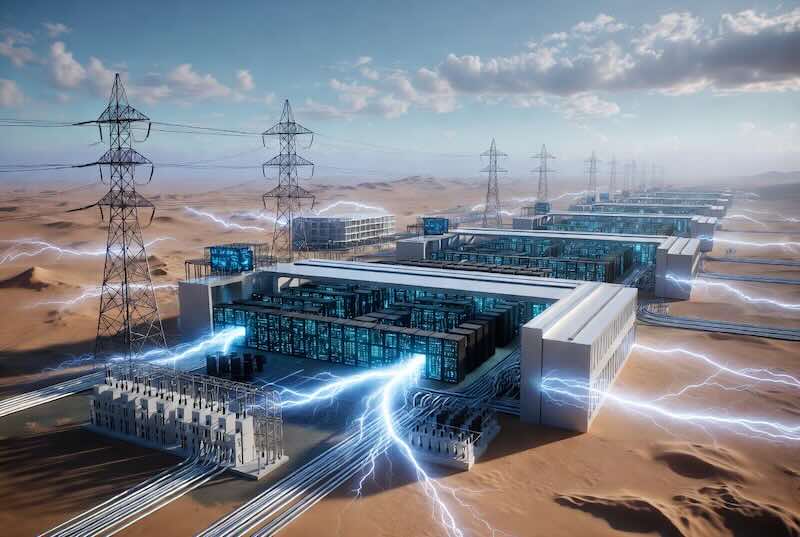
What happened: Climate and community groups in the UK are planning two days of coordinated protests against the expansion of large data centres built to support growing demand for AI services, according to a Reuters report excerpted by Watts Up With That?
Why it matters: The activists’ core claim is that hyperscale facilities will lock in major new electricity demand, making it harder to hit emissions targets unless the grid grows and decarbonises fast enough to keep pace.
Wider context: Data-centre buildouts are becoming a visible local issue—land use, jobs, water, noise, and power—because the compute race is colliding with slow-moving grid upgrades and political promises on climate and bills.
Background: The excerpt cites the UK energy regulator saying data centres have signalled they could need up to 50 gigawatts of power, compared with 45 GW of peak UK electricity demand on February 11—numbers that frame why activists are focusing on infrastructure, not just software.
Mass Protests Planned Over AI “putting the UK's climate targets at risk” — Watts Up With That? (via Reuters excerpt)
Singularity Soup Take: Protests won’t change the math: if policymakers want both AI capacity and climate targets, they need to treat grid buildout as the bottleneck project—otherwise every new data centre becomes a proxy fight over credibility and trade-offs.
Key Takeaways:
- Two-Day Action: The Reuters excerpt describes UK activists planning protests over two days at multiple sites, framing data-centre expansion as a community and environmental issue rather than a purely tech-sector decision.
- Grid-Scale Numbers: The UK regulator is cited saying data centres have indicated they could require up to 50 GW of electricity—set against 45 GW peak national demand on February 11—highlighting why power constraints are central to the debate.
- Targeting Big Tech: The planned “March Against The Machines” is described as starting at an OpenAI office, signalling a strategy of linking household-level impacts to recognisable AI brands and the broader hyperscale buildout.