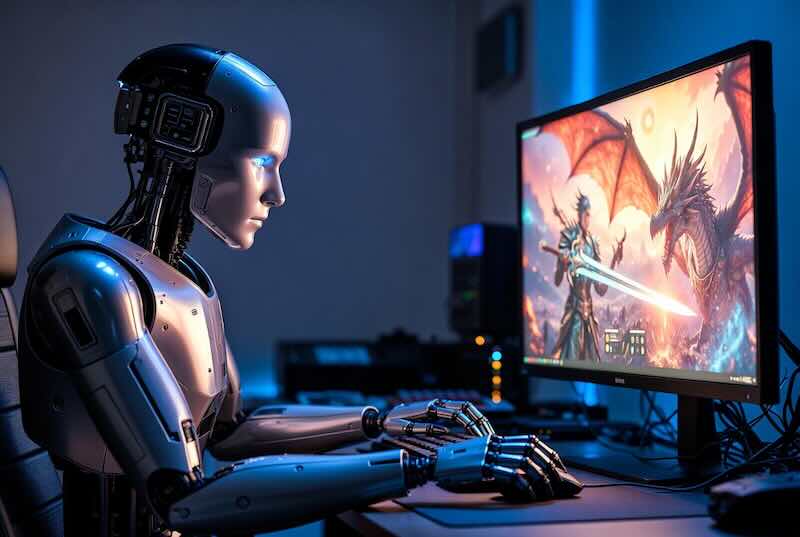
What happened: The Game Developers Conference 2026 revealed a stark divide: while 52% of studios now use generative AI in some capacity, developers themselves are increasingly skeptical, with 52% calling it bad for the industry—up from just 30% last year. Gamers continue to rebel against undisclosed AI use, while Nvidia's DLSS 5 "yassified" character models drew public backlash for overriding artist intent.
Why it matters: The gaming industry is discovering what other creative fields already know: generative AI excels at producing mediocre content that humans must then fix. Union leaders report that AI-generated code and art requires so much revision that studios might have been better off without it. Freelancers, amusingly, are thriving by getting hired to clean up AI's mistakes.
Wider context: Unlike the web3 and NFT hype cycles that came before, generative AI faces genuine resistance from both workers and consumers. Major studios remain largely silent on AI integration, while smaller developers experimenting with tools like Google's Gemini admit they're using it for prototyping—not final products. The pattern suggests AI may be more useful as a brainstorming aid than a replacement for human creativity.
Background: The backlash intensified after Larian Studios' CEO mentioned using generative AI for ideation, prompting such fierce criticism that the company walked back its plans. Even AI proponents acknowledge the tools' limitations: one developer had Claude audit 2,000 lines of code, only to find 10 of 12 reported "bugs" were false positives that would have introduced new errors if applied.
Generative AI in Gaming Is Here, but Facing Pushback from Gamers – and Developers — CNET
Singularity Soup Take: The gaming industry has accidentally discovered that generative AI is excellent at generating work for humans who fix its output—a kind of reverse automation that somehow makes everything slower and worse.
Key Takeaways:
- Developer skepticism rising: 52% of game developers now believe generative AI is bad for the industry, nearly double the 30% who held that view just one year ago according to GDC's annual survey.
- AI as accelerator, not replacement: Engineers report that code-generation tools like Claude Code and Codex can speed up work but require significant oversight—unskilled users risk introducing more bugs than they fix.
- Player backlash is immediate: Gamers have shown fierce resistance to undisclosed AI use in games, with studios like Larian walking back plans after public outcry—even when AI was only used for early ideation.
- Union resistance organized: The Communication Workers of America and United Videogame Workers are actively campaigning against AI tools that threaten employment, with developers insisting AI should only assist, never replace human labor.