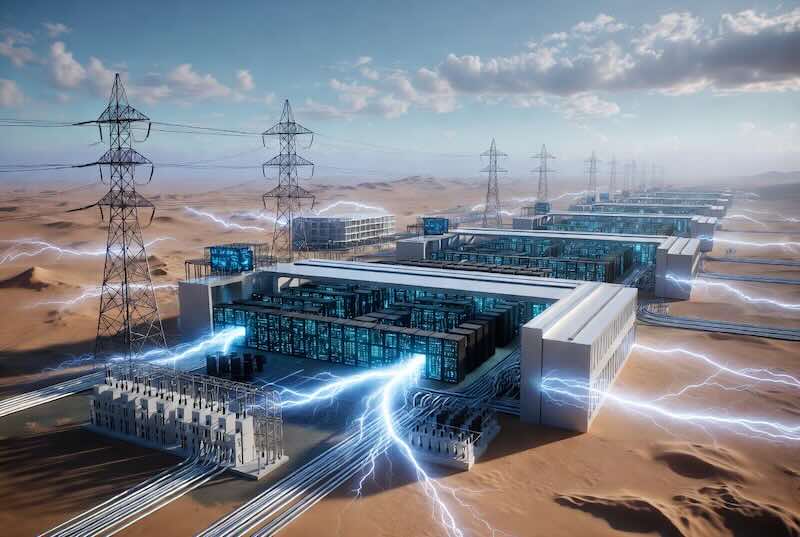
What happened: A report highlighted — and Google confirmed — a Crusoe-led plan for a 933MW natural-gas plant tied to the “Goodnight” data center campus in Texas. The permit filing suggests at least two campus buildings could run off-grid, because apparently the grid is optional when your compute bill is the plot.
Why it matters: This is infrastructure-as-policy in real time: hyperscalers can’t wait for permitting timelines and transmission upgrades, so they’re dragging generation to the data center. That shifts climate accountability, local backlash, and grid cost allocation — and it’s not just Google eyeing the gas lever.
Wider context: The Guardian notes Google has softened its old “carbon neutral by 2030” posture into fuzzier “moonshots,” while rising AI power demand keeps pushing emissions upward. Meta, Amazon, and Microsoft are also leaning into gas-backed expansion as AI data centers scale faster than clean capacity.
Background: Cleanview’s analysis cites Crusoe’s permit application estimating up to 4.5 million tons of CO₂ per year from the plant, and satellite imagery indicating construction progress. Google says it has no contract for the Texas plant yet, while also pointing to regional wind partnerships.
Google to tap into gas plant for AI datacenter in sharp turn from climate goals — The Guardian
Singularity Soup Take: “Net zero” is easy when it’s mostly a procurement strategy and a PDF. The moment AI demand becomes a hard constraint, the clean-energy story turns into a scavenger hunt for megawatts — and the fossil option keeps showing up like a bad habit with a balance sheet.
Key Takeaways:
- 933MW On-Site Power: Cleanview highlights a Crusoe permit filing for a large natural-gas plant associated with Google’s Goodnight campus in Texas, potentially powering parts of the data center off-grid while construction and grid constraints persist.
- Emissions Trade-Off: The permit application cited in the report estimates up to 4.5 million tons of CO₂ annually, underscoring how “AI scale” and climate commitments collide when new compute capacity arrives faster than carbon-free generation.
- Industry Pattern: The piece frames the Texas project alongside other recent gas-linked moves involving major tech firms, suggesting natural gas is becoming a default bridge (or crutch) as data center demand accelerates.