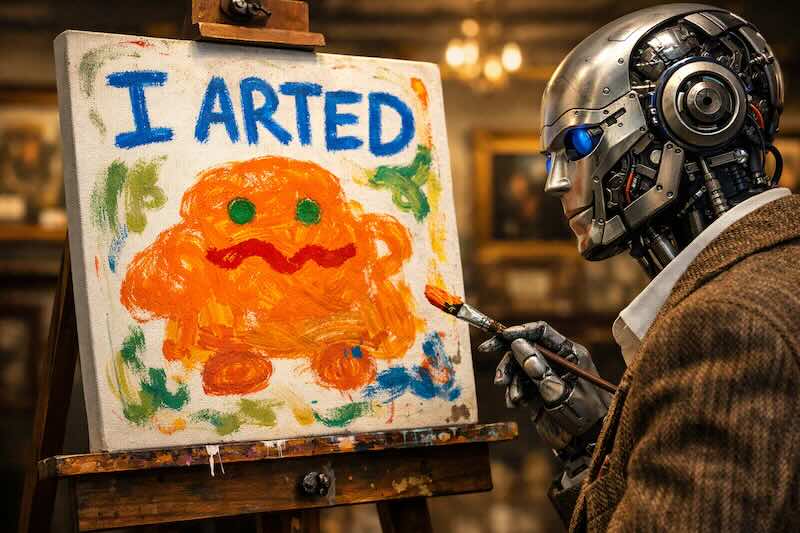
What happened: Hachette’s Orbit Books has pulled the U.S. release of Shy Girl — and is discontinuing the UK edition too — after accusations the text was AI-generated. The book vanished from publisher pages and Amazon faster than a publicist spotting the word “ChatGPT”.
Why it matters: Publishers are being pushed into playing AI forensics: deciding whether “odd phrasing” is just a bold stylistic choice or a language model leaving greasy fingerprints. The industry is discovering that “prove you didn’t use AI” is a thrilling new sport with no referee.
Wider context: Readers and editors are getting more aggressive about flagging suspected machine-written fiction, while detection remains messy and contested. At the same time, the economic temptation for cheap text generation keeps rising, because budgets love automation even when art loudly files a complaint.
Background: Author Mia Ballard has denied using AI to write the novel, saying an acquaintance hired to edit an earlier self-published version used AI. The book was first self-published in 2025, later acquired by Orbit, and drew heavy scrutiny as allegations spread online.
Shy Girl by Mia Ballard: Horror novel pulled by publishers over alleged AI use — BBC News
Singularity Soup Take: If publishing wants to police AI-assisted writing, it needs clearer rules than “the internet got a weird vibe.” Right now we’ve built a high-stakes authenticity tribunal where the evidence is vibes, the verdict is commercial, and the appeals process is… deleting your socials.
Key Takeaways:
- Publication pulled: Hachette said Orbit reviewed the text and decided not to publish the U.S. release, and the UK edition will be discontinued after selling roughly 1,800–2,000 print copies, according to sales tracking cited in coverage.
- AI accusations spread online: Allegations circulated on Reddit and elsewhere that the novel was written with tools like ChatGPT, with critics pointing to repetitive phrasing and unusually uniform tone as “tells” — persuasive to humans, not exactly a scientific standard.
- Author denies AI use: Ballard said she did not personally use AI and blamed an editor for an earlier version; she also described the fallout as severely affecting her mental health in statements reported by other outlets.
Related News
Hydaway Launches "Detect" to Spot AI-Generated Fakes — Detection tools keep multiplying, but this story shows the real battle is social: who gets believed when “AI-written” becomes an accusation, not a measurement.
GPT-5.4 Mini and Nano: Cheaper Speed for Agents — Cheaper, faster models make “mass-produced text” easier for everyone — including people trying to pass it off as human-crafted art.
Relevant Resources
AI Tools & Applications — A quick map of common AI writing and generation tools (and why “did you use one?” is becoming an unavoidable question in creative industries).